
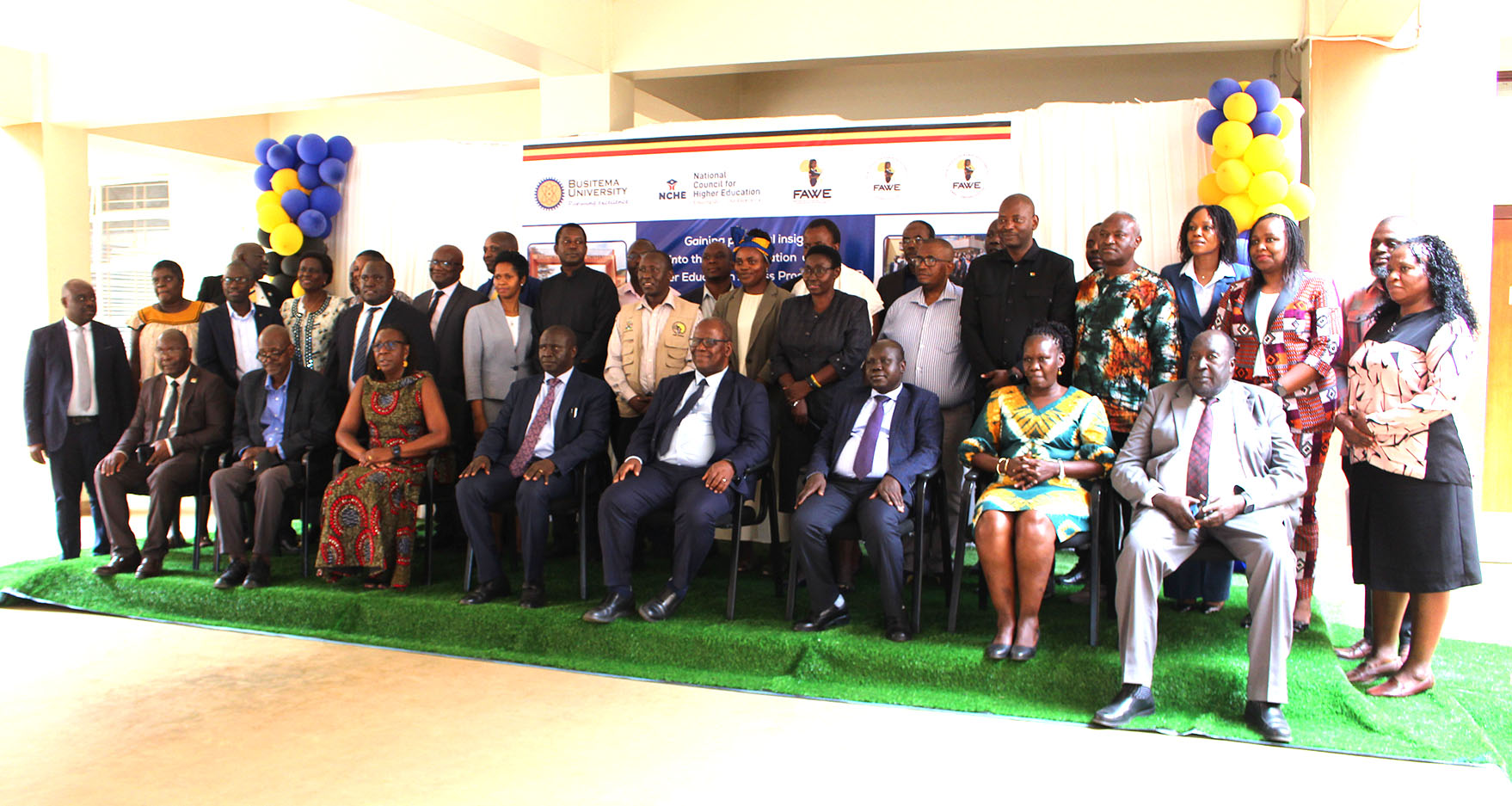
On 5 May 2026, Busitema University hosted a high-level delegation from the Zimbabwe Council for Higher Education and the Ministry of Higher and Tertiary Education, Innovation, Science and Technology Development of Zimbabwe for a benchmarking visit on the Higher Education Access Programme (HEAP).
The delegation, led by the Permanent Secretary in Zimbabwe’s Ministry of Higher and Tertiary Education, Prof. Fanuel Tagwira, visited the university’s main campus to learn from Uganda’s experience in implementing HEAP, an initiative aimed at expanding access to university education for disadvantaged learners. The Zimbabwean team was accompanied by officials from FAWE Africa, FAWE Uganda, Uganda’s Ministry of Education and Sports, the National Council for Higher Education (NCHE), and the Vice Chancellor of Soroti University, Prof. John Robert Ikoja-Odongo
Welcoming the delegation, the Vice Chancellor of Busitema University, Prof. Paul Waako, thanked the visitors for selecting Busitema University as part of their benchmarking mission.
“Your presence here today is evidence of the growing collaboration between Uganda and Zimbabwe in advancing higher education on the African continent,” Prof. Waako said.
Prof. Waako highlighted the achievements of HEAP since its introduction at Busitema University in 2019. The programme began with 71 students, 60 of whom were sponsored by FAWE. Through structured academic support, mentorship, and a learner-centred approach, the pioneer cohort successfully transitioned into degree programmes and graduated. Subsequent cohorts have continued to perform competitively alongside students admitted through direct entry, diploma, and mature-age entry schemes.
“To us, HEAP is one of the most significant innovations in higher education because it expands access despite barriers such as regional economic inequalities, the rural-urban divide, unequal distribution of schools and learning materials, and cultural stereotypes,” he noted. According to Prof. Waako, the programme has enabled the university to provide a second chance to students with non-traditional entry qualifications, bridge foundational gaps in STEM subjects, support learners from underrepresented communities, and promote gender equity in science disciplines.
He also commended FAWE for championing educational opportunities for disadvantaged learners and strengthening partnerships among African institutions. Prof. Waako expressed optimism that the collaboration would expand into joint academic programmes, research initiatives, and staff and student exchange programmes aimed at advancing higher education in Africa. He further encouraged African institutions to embrace self-reliance and collaboration in light of lessons learned from the COVID-19 pandemic and global economic disruptions.